
Youth Suicide Prevention
October 2026
The twelfth Day of Action was on October 28, 2026 and focused on youth suicide prevention, particularly how we all have a role to play. You can search the hashtag #YouthSuicidePrevention on your favorite social media channel to see some of the great posts from participants and partners.
T4CIP trainees were asked to promote #YouthSuicidePrevention messages during a targeted Day of Action, but these materials are available to use year-round.
Topic experts:
Lead topic experts: Center for Suicide Prevention and Research at Nationwide Children’s Hospital
Click here for additional topic experts.

Promotional Graphics
Download the graphics by clicking your preferred size (Instagram post, story, slide).



Social Media Graphics
Download the graphics by clicking your preferred size (social media post, Instagram story) and language (English or Spanish).


Additional Outreach Materials

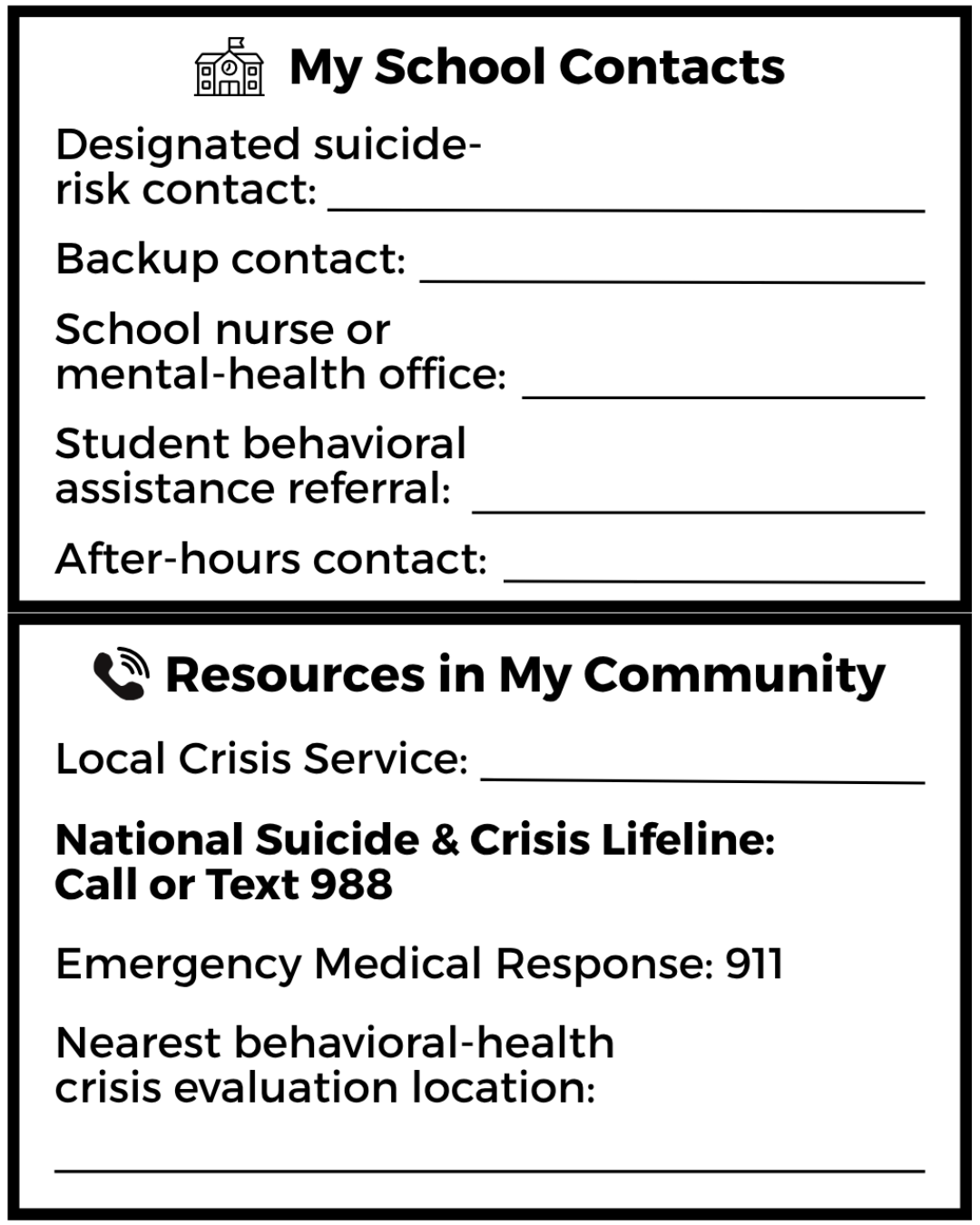
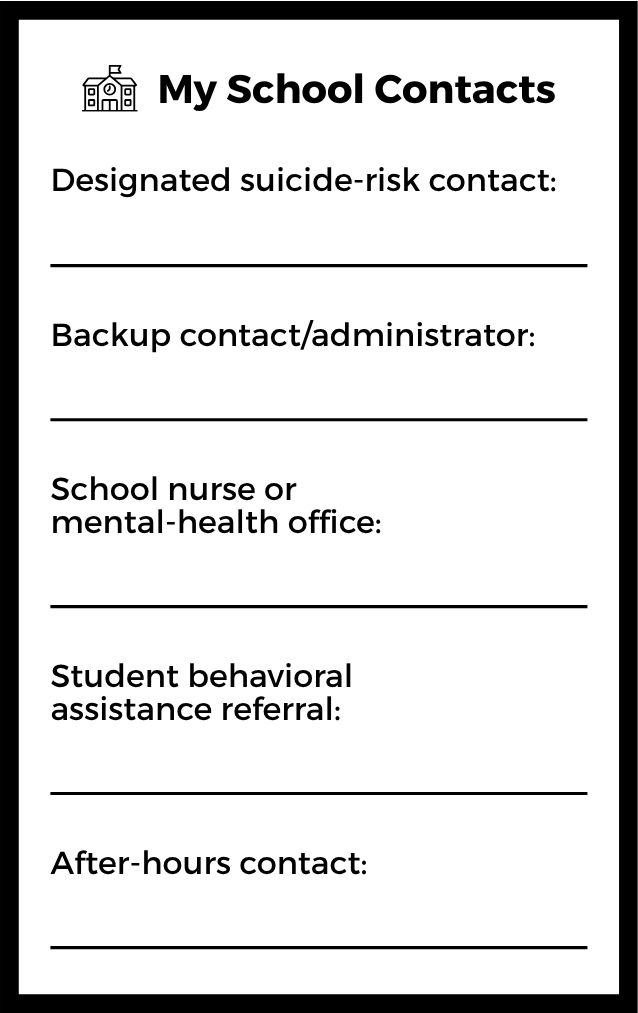
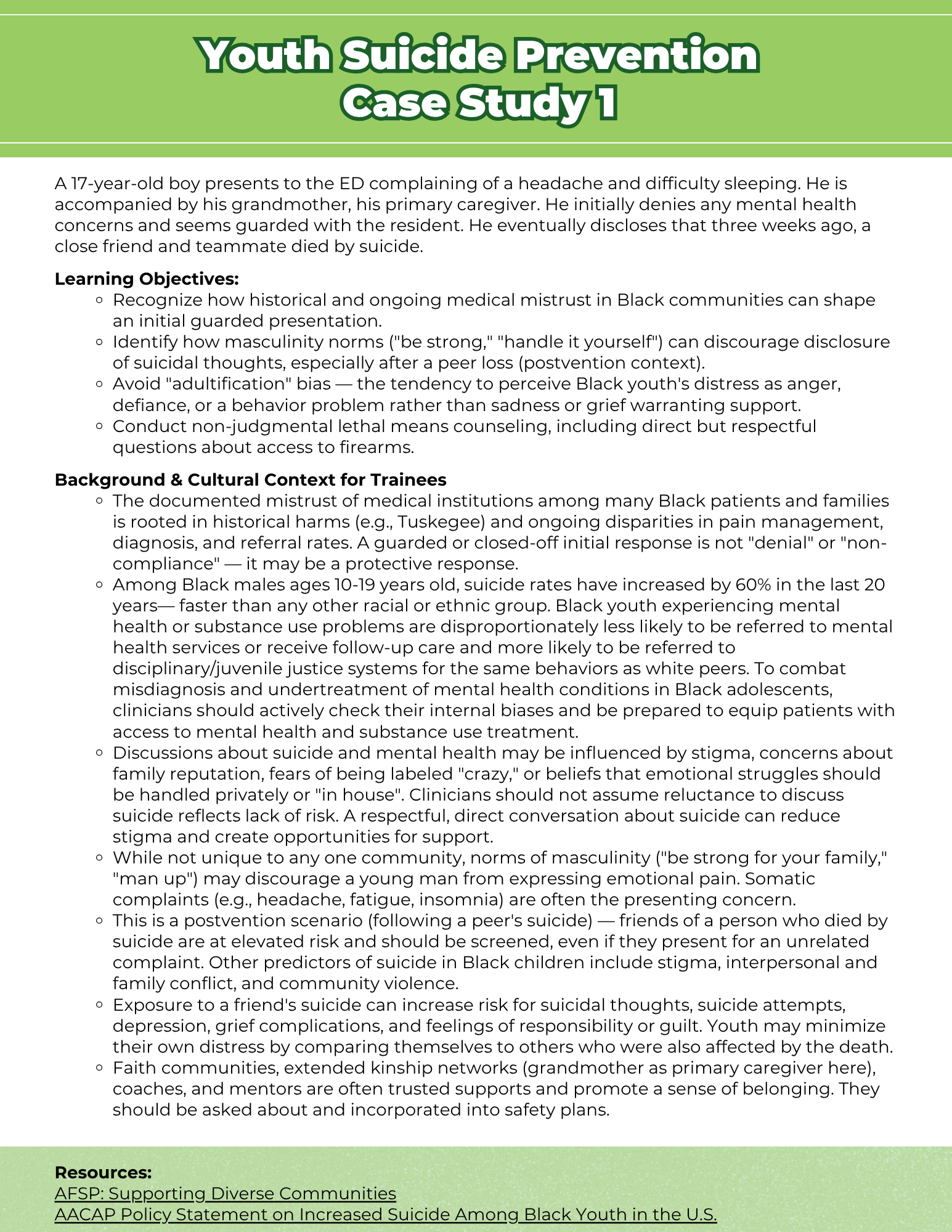
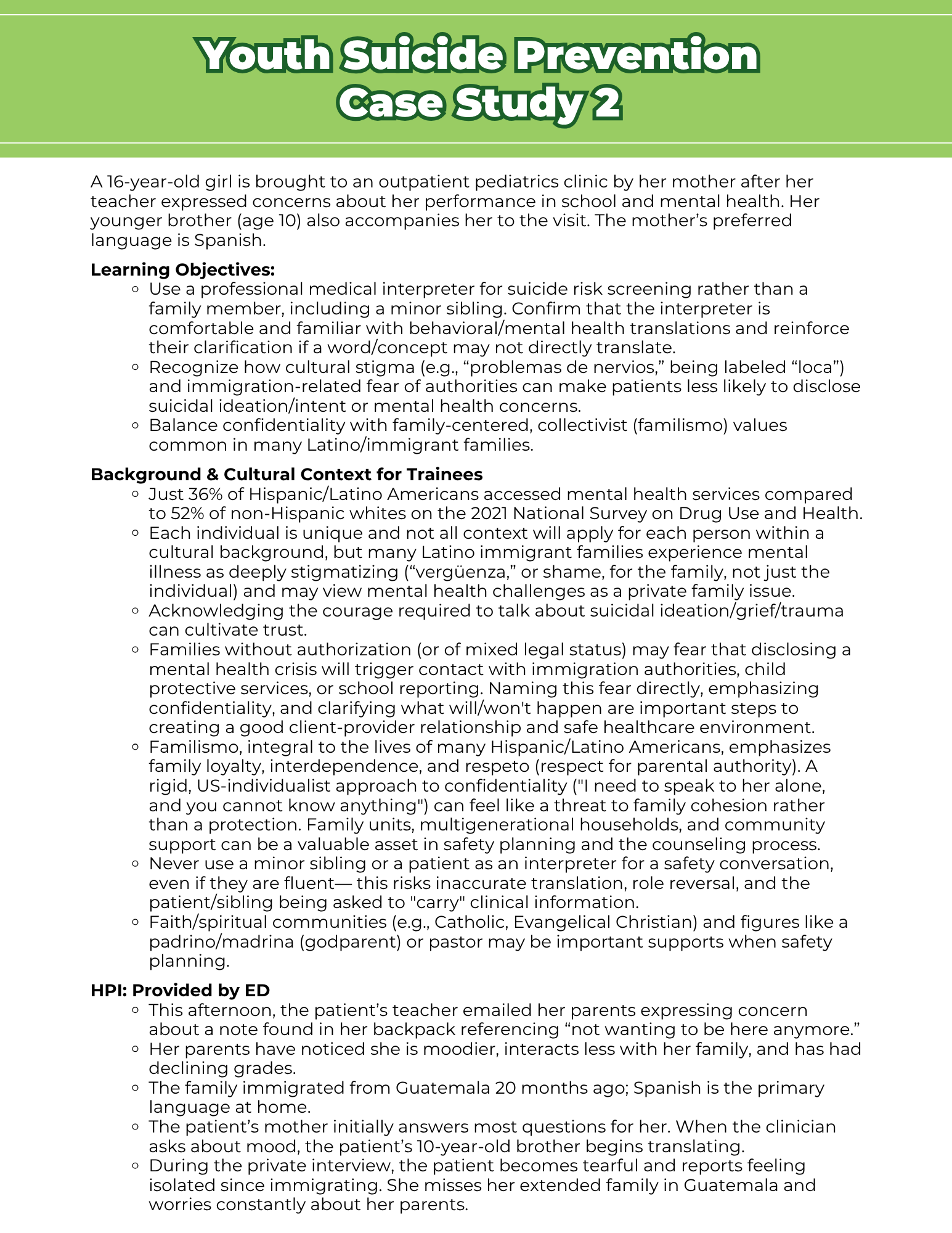
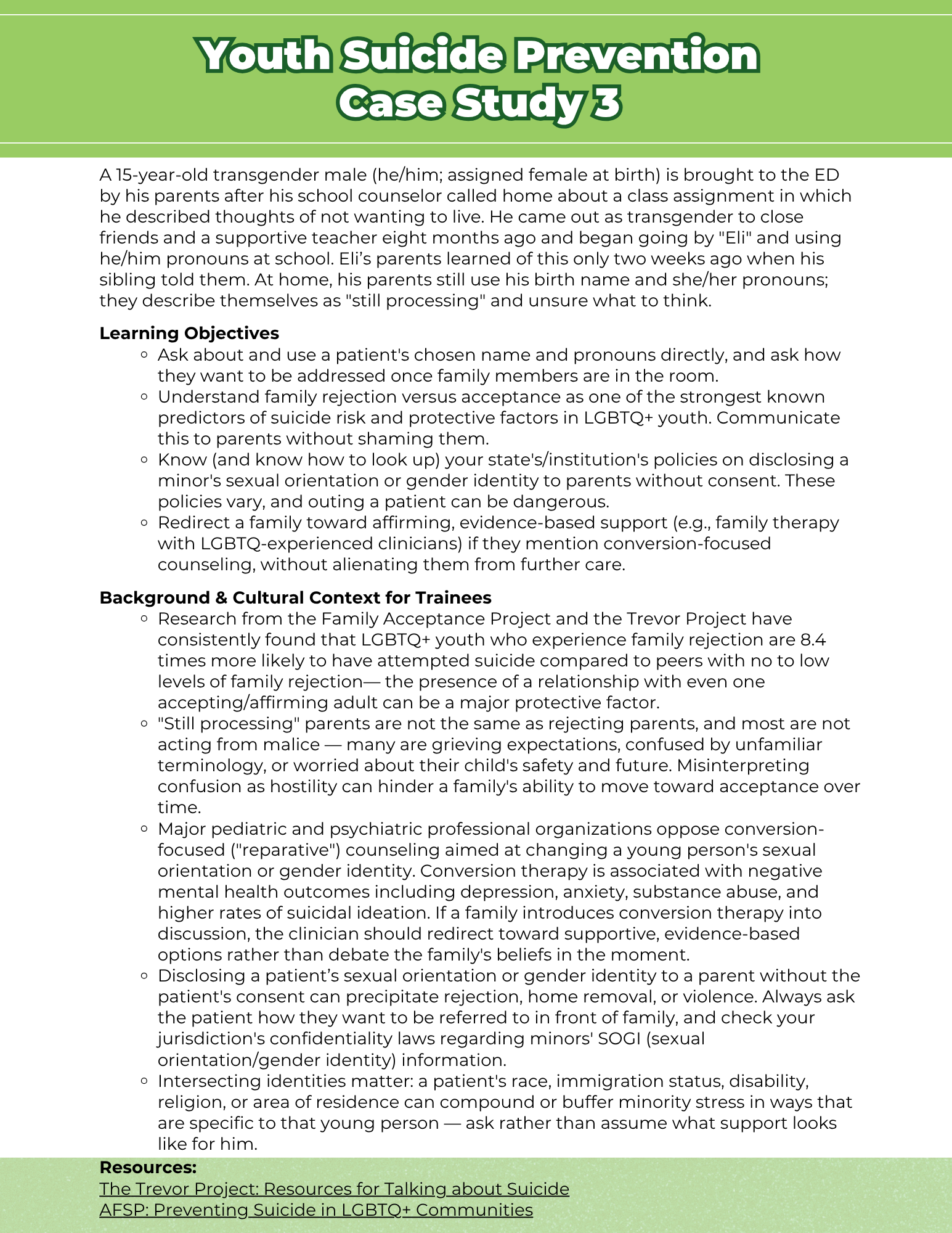
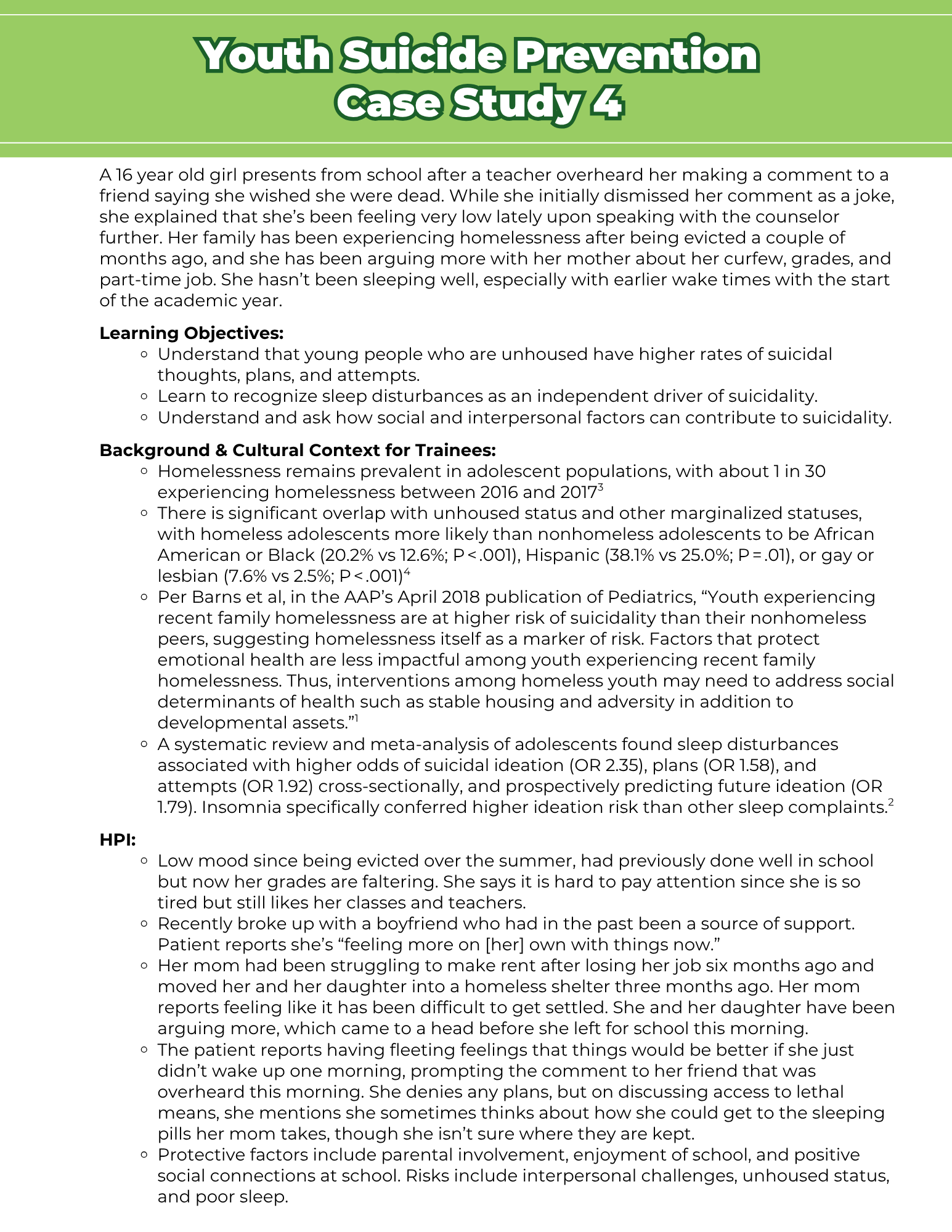
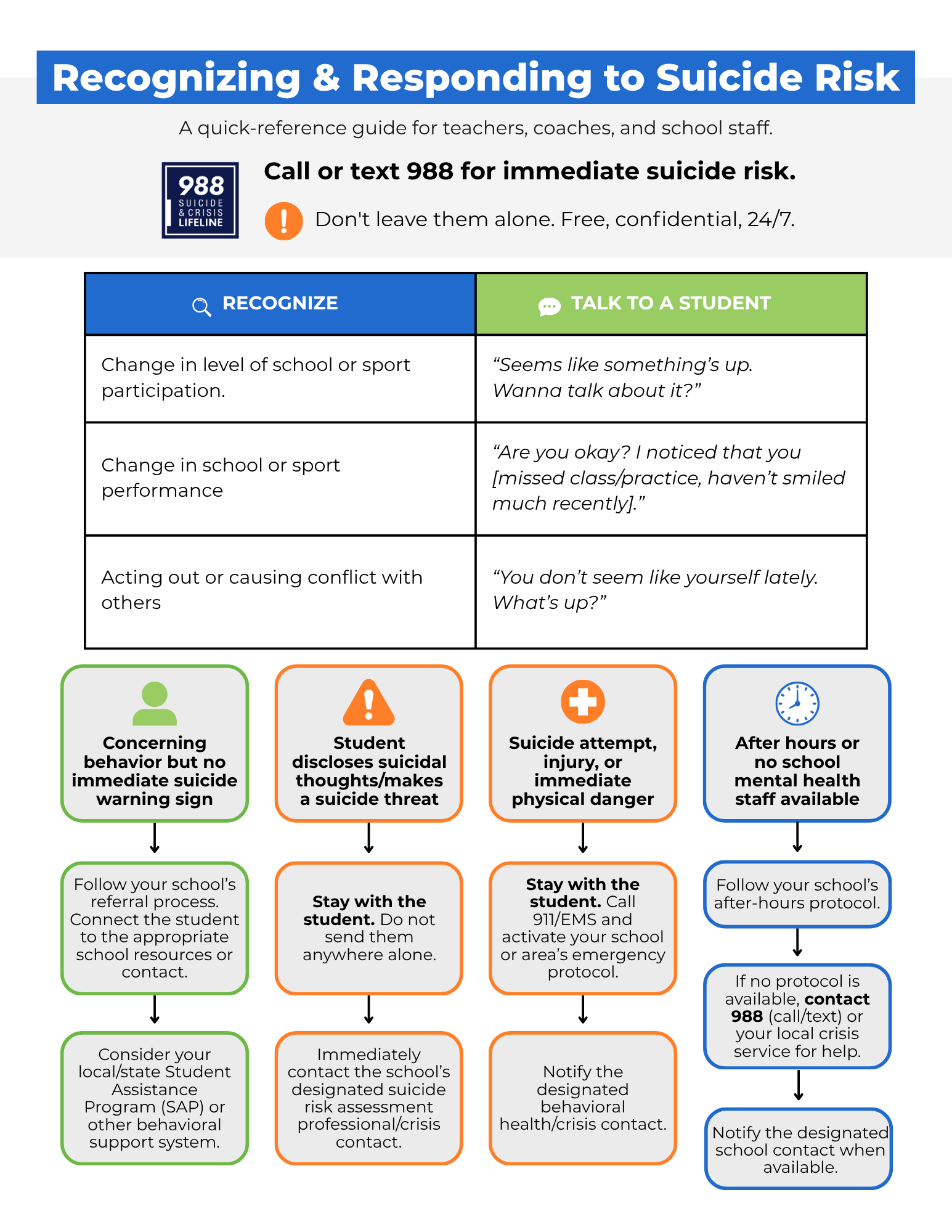
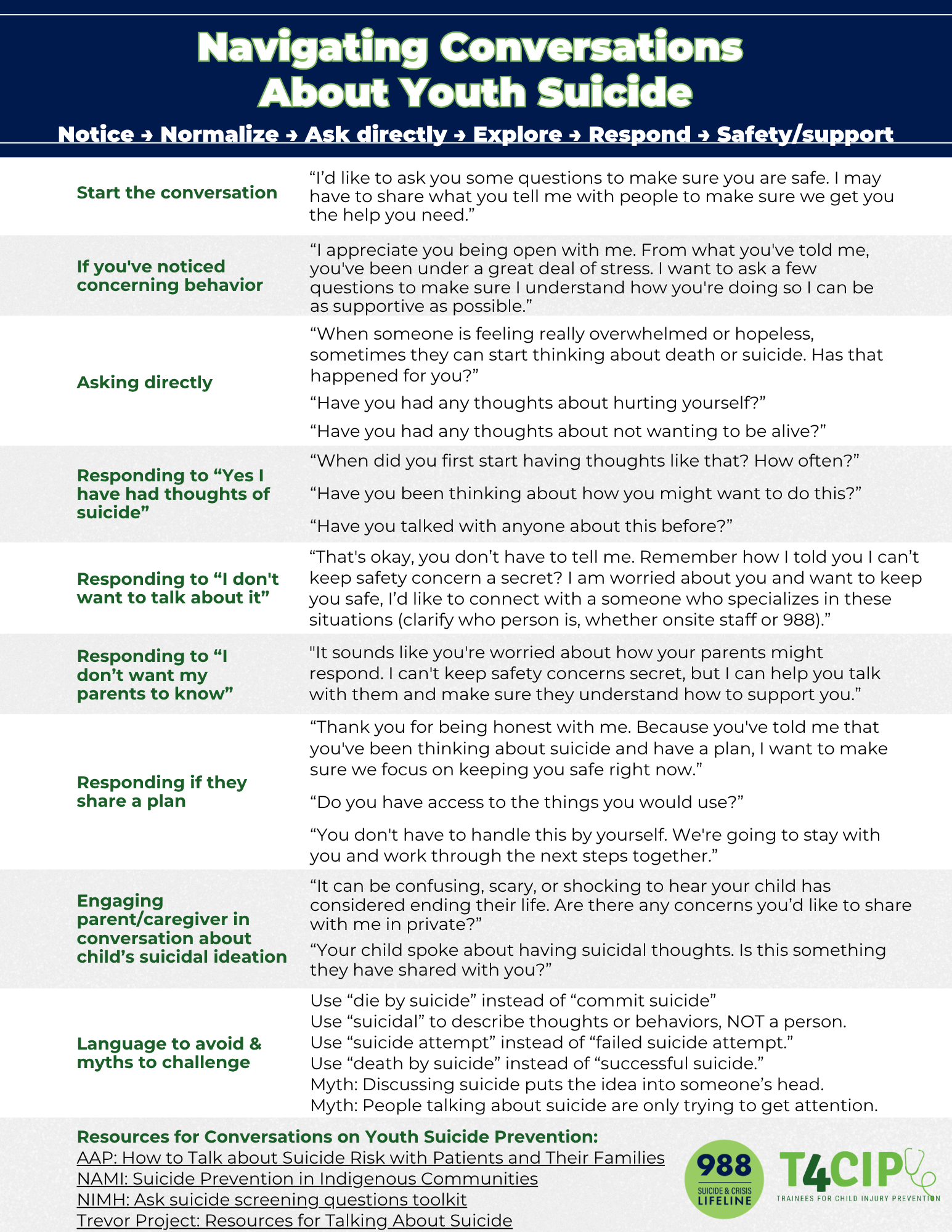
Validated Tools from Partners: Safety plans and risk assessments
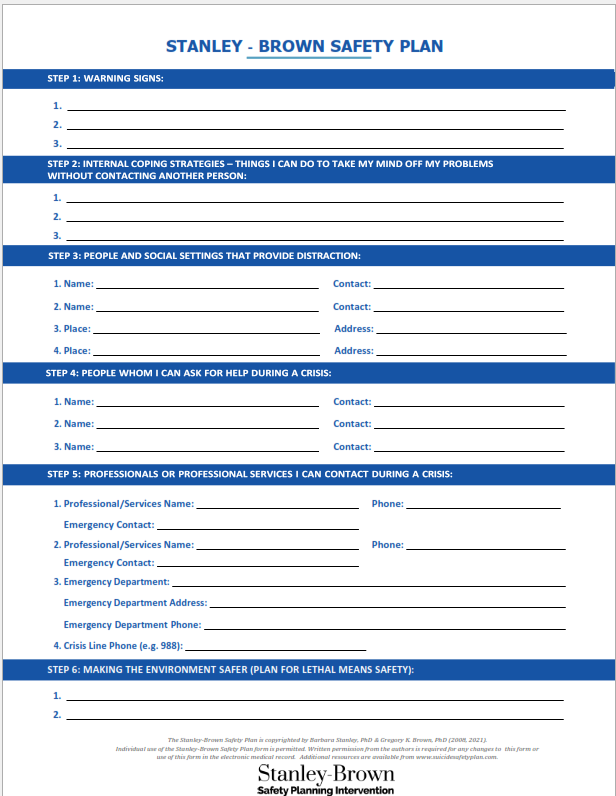
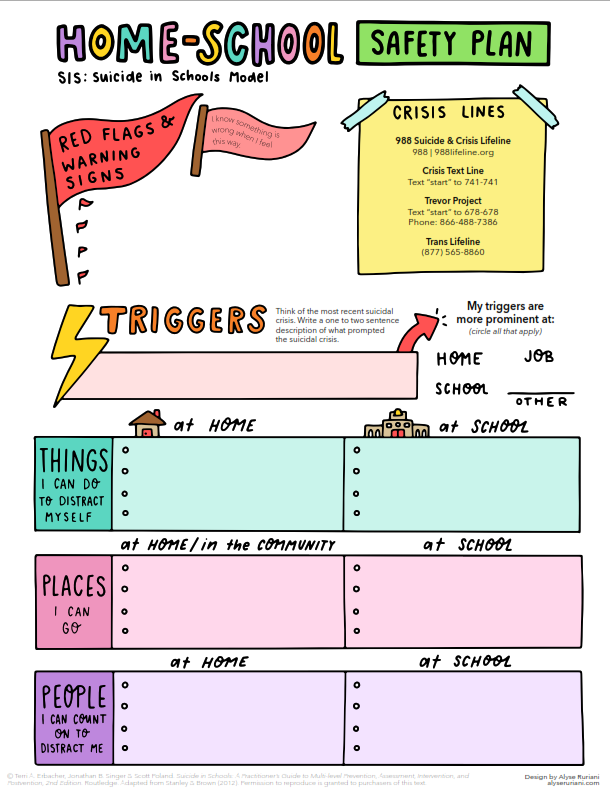
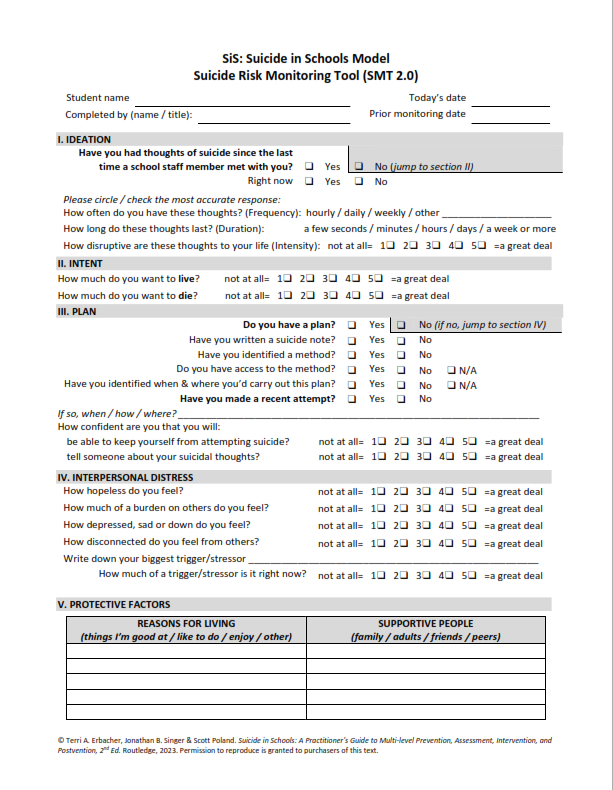
Outreach Materials from Trusted Partners
At the 988 Suicide & Crisis Lifeline, we understand that life's challenges can sometimes be difficult. Whether you're facing mental health struggles, emotional distress, alcohol or drug use concerns, or just need someone to talk to, our caring counselors are here for you. You are not alone.

The American Academy of Child & Adolescent Psychiatry provides clinical guidance, family education materials, and practice resources focused on youth suicide prevention and intervention.
The American Academy of Pediatrics and American Foundation for Suicide Prevention, in collaboration with experts from the National Institute of Mental Health, created the Blueprint for Youth Suicide Prevention as an educational resource to support pediatric health clinicians and other health professionals. It's designed to help you identify equitable youth suicide prevention strategies and key partnerships in all settings where youth live, learn, work, and spend time.
The American Association of Suicidology (AAS) is a 501(c)(3) nonprofit organization and the nation’s largest and oldest suicide prevention membership association. AAS is widely recognized as a global leader in the development, implementation, and evaluation of professional training, accreditation, and certification programs that advance the science and practice of suicide prevention.
Learn about the American Foundation for Suicide Prevention, and our mission to save lives and bring hope to those affected by suicide.
Ask Suicide-Screening Questions (ASQ) Toolkit – National Institute of Mental Health (NIMH) is a free, evidence-based toolkit designed for medical settings that provides validated youth suicide risk screening tools, clinical pathways, training materials, and implementation guidance.
Columbia Lighthouse Project (C-SSRS) offers the Columbia-Suicide Severity Rating Scale (C-SSRS), one of the most widely used tools for suicide risk assessment in pediatric and healthcare settings.
The National Action Alliance for Suicide Prevention (Action Alliance) is the nation’s public-private partnership for suicide prevention, working with national partners to advance the National Strategy for Suicide Prevention.

Youth Suicide Prevention toolkit from Prevent Child Injury.
SAFE-T (Suicide Assessment Five-Step Evaluation and Triage) provides a structured framework that helps clinicians identify risk and protective factors, conduct suicide assessments, determine risk level, and develop intervention plans.
Seize the Awkward is a youth-focused campaign that helps young people recognize mental health concerns, start conversations with friends, and connect peers to support when they may be struggling.
Society for the Prevention of Teen Suicide (SPTS) is dedicated to increasing awareness, saving lives and reducing the stigma of suicide through specialized training programs and mental health resources that empower students, parents, school staff and community members with the skills needed to help youth build a life of resiliency.
Store It Safe is a unique partnership of healthcare providers, firearm safety experts, and community organizations established to keep children safe from unintentional firearm deaths and teens safe from suicide by firearms. Young children are often curious and will touch anything, while teens are still learning to control impulses. Our goal is to inform families of risks so they can keep their children safe.
The Jason Foundation, Inc. (JFI) is dedicated to the awareness and prevention of youth and young adult suicide by providing educational programs and resources that empower students, parents, educators, and the community to be better able to recognize and assist at-risk individuals.
The Jed Foundation is a nonprofit that protects emotional health and prevents suicide for our nation’s teens and young adults, giving them the skills and support they need to thrive today…and tomorrow.
The Trevor Project is a non-profit suicide prevention organization that provides 24/7 crisis support services, research, and advocacy for LGBTQ+ young people.
Zero Suicide - After Your Child’s Suicide Attempt
After Your Child’s Suicide Attempt is a one-hour film providing support and guidance for parents and caregivers after their child has attempted suicide.
Provides healthcare organizations and clinicians with practical resources for screening, assessment, safety planning, treatment, and follow-up care for individuals at risk for suicide.
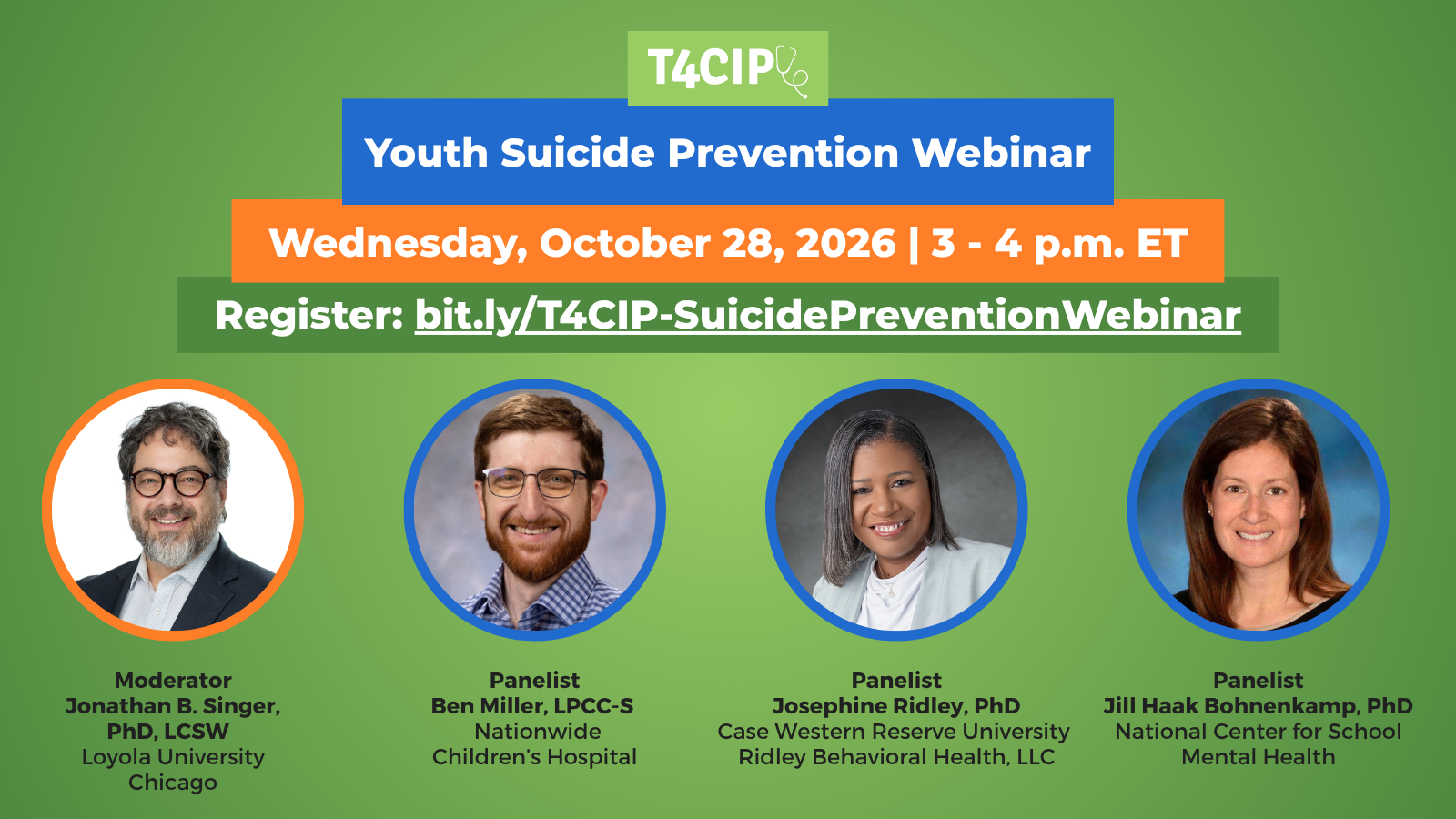
This webinar is part of T4CIP's #YouthSuicidePrevention Day of Action.
Preventing youth suicide takes all of us. In this T4CIP Day of Action webinar, moderator Jonathan Singer led a conversation with experts in healthcare, schools, and youth mental health about the role adults who work with children and teens can play in suicide prevention. Panelists shared practical ways to recognize concerns, build stronger connections across systems, support young people and families, and turn awareness into action in the settings where youth live, learn, and receive care.
Youth suicide prevention expert moderator and panelists:
Jonathan Singer, PhD, LCSW (moderator)
Ben Miller, MEd
Josephine Ridley, PhD
Jill Haak Bohnenkamp, PhD